
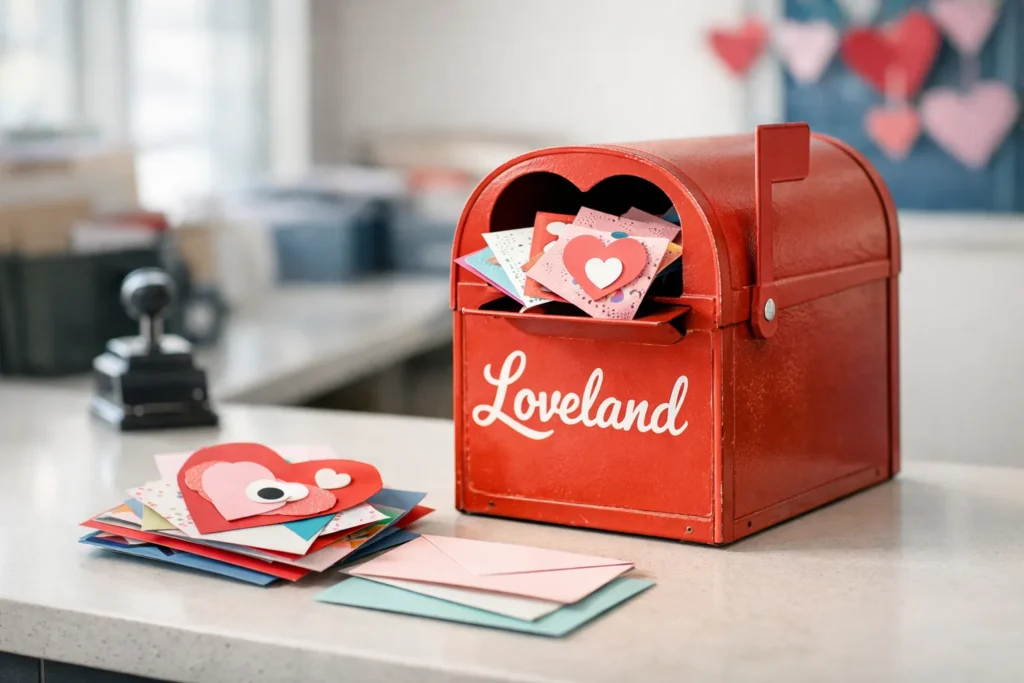
Loveland, Colorado, calls itself the Sweetheart City, and every winter its Valentine Re-Mailing Program takes thousands of cards from around the world, stamps them with a special cachet and verse, and sends them on to their recipients. The community has run the program for decades. The city posts the current deadlines and instructions on its official site, so check the City of Loveland before you mail anything, since dates and addresses can change from year to year.
Before any envelope goes in the mail, though, there is the fun part: making the cards.
Four card styles kids can make
The pop-up heart
Fold a sheet of red or pink cardstock in half like a book. Fold a smaller strip of paper in half and cut two parallel slits from the fold, each about an inch long. Push the cut tab through to the inside, creasing it into a small step, then glue a paper heart onto the front of the step. Close the card, and the heart pops forward when it opens.
The woven heart pocket
Cut two strips of contrasting paper, each about 1 inch wide and 6 inches long. Fold each strip in half, then interlace the folded ends like a basket and trim the corners into a rounded heart. Kids can tuck a note or a sticker inside.
The stamped potato heart
Cut a potato in half, press a heart-shaped cookie cutter into it, and slice away the flesh around the shape. Dab the stamp into washable paint and press it on plain paper. Adults should do the cutting, and any stamps should be thrown out after the day.
The accordion heart chain
Fold a long strip of paper back and forth like an accordion, about 2 inches (5 cm) per fold. Draw half a heart on the top layer so the center of the heart touches the fold on one side, then cut along the line without cutting through that fold. Open the strip and you have a row of linked hearts. Glue it inside a plain folded card, or mail it flat in a larger envelope. Older kids can write one short message on each heart, like a tiny poem in segments.
Supplies that keep things simple
- Cardstock in red, pink, white, and cream
- Child-safe scissors and a glue stick
- Washable markers and crayons
- Envelopes that fit the finished card
For young kids, choose glue and markers that carry the ACMI seal and stay at the table while they work.
From craft table to mailbox
Once the cards are signed, write the recipient’s full address in dark ink, add your return address, and apply a stamp. Follow the U.S. Postal Service rules for envelope size and thickness; a card with a lumpy pop-up may need extra postage, and the U.S. Postal Service site explains the limits. If you want the Loveland cachet, you place your sealed, stamped, addressed card inside a larger mailing envelope according to the city’s instructions, rather than mailing the card directly to the recipient.
Mail everything well before February 14, since delivery takes time. A handwritten message inside is what makes the card special, so let each child add a sentence of their own.
If you would like more ideas for working with scissors and paper, take a look at paper crafts and printables.