
Thanksgiving crafts work best when the project fits the child. A four-year-old needs something quick and sticky; a tween wants a project with real steps. The table below sorts easy ideas by age, with realistic times and supplies you probably already own.
Plimoth Patuxet Museums, in Plymouth, Massachusetts, is a living-history museum that presents the 17th-century English colonists and the Wampanoag people whose homeland it was. Its educators emphasize that the story deserves care and accuracy, and that Wampanoag people are very much alive today. Keep that in mind as you choose projects: crafts that celebrate gratitude, harvest, and family hold up well, while paper “costumes” and costume-style headdresses do not.
| Age | Craft | Time | Supplies |
|---|---|---|---|
| 3 to 5 | Handprint leaf wreath | 20 minutes | Washable paint, paper plate, glue stick |
| 3 to 5 | Gratitude tree with torn-paper leaves | 25 minutes | Construction paper, brown paper roll, tape |
| 6 to 8 | Woven paper placemat | 30 to 40 minutes | Paper strips in fall colors, child-safe scissors, tape |
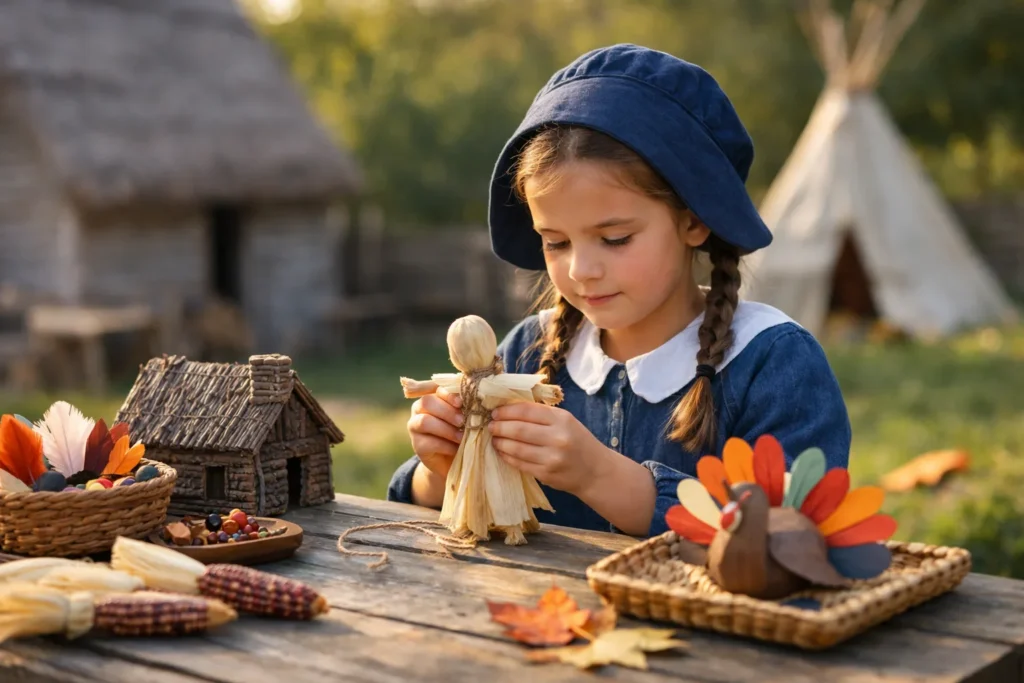
| 6 to 8 | Painted corn-husk doll | 45 minutes | Dried husks, string, markers |
| 9 to 12 | Gratitude garland from folded paper | 45 minutes | Cardstock, hole punch, twine, pens |
| 9 to 12 | Cinnamon-scented clay ornaments | 1 hour plus drying | Applesauce, cinnamon, cookie cutters, a straw |
Ideas for the youngest crafters
Preschoolers enjoy stamping, tearing, and gluing. Let them tear paper into leaf shapes instead of cutting, which is easier on small fingers and builds hand strength. Have a damp washcloth ready for paint hands, and write each child’s name and the date on the back of every piece. These make sweet keepsakes to look at again next year.
For elementary-age kids
This is the age for patterns and sequences. A woven placemat teaches over-and-under thinking, and corn-husk dolls are a hands-on introduction to a traditional craft. Soak dried husks in warm water for about 15 minutes until they are pliable, then tie them with string. Adults should handle any sharp tools. Choose paint, glue, and markers marked with the ACMI seal.
For tweens
Older kids like projects they can display or give away. A gratitude garland lets each person at the table add a line about what they appreciate. Scented ornaments made with cinnamon and applesauce smell like the kitchen and are not meant to be eaten, so label them for younger siblings.
Setting up the craft table
Whatever the age, a little preparation keeps the afternoon calm. Cover the table with kraft paper or newspaper, and pre-cut anything that needs a blade before the kids sit down. Put supplies in muffin tins or paper cups so each child has a small, manageable set of colors. Work near a sink if you can, and keep a trash bag handy for scraps. Set a timer for the younger group, because ten focused minutes beats forty restless ones, and let older kids keep going as long as they like. Finish by hanging the results somewhere everyone passes, such as a hallway or a refrigerator door, so the work gets noticed.
Tell the history with care
If a craft leads to questions about the first Thanksgiving, answer honestly and say what you do not know. The Plimoth Patuxet Museums site offers background pages that both adults and older kids can read together. Treat Native peoples as living communities, not costume characters, and encourage kids to ask questions instead of assuming. Pair history with something practical, like a family recipe card, so the craft table connects to the dinner table.
For more hands-on projects that use only paper, see paper crafts and printables.