
You finish a swatch of stockinette stitch, set it on the table, and watch the top and bottom edges roll toward the back while the sides roll toward the front. It is not a mistake, and it is not your tension. It is how the stitch is built, and once you know the reason, you can plan around it.
What makes the fabric curl
Stockinette is knit on the right side and purled on the wrong side. The knit side forms little V shapes, and the purl side forms bumps. The two faces are not equal. The knit side is flatter and tighter, and the purl side bulges a bit, so the fabric naturally bends toward the knit side at the top and bottom and toward the purl side at the sides.
It is a bit like a strip of wood that was cut unevenly and slowly warps. Heavier yarns and tighter knitting make the roll more pronounced. A long scarf in stockinette will often turn into a tube by the time you reach the end.
Stop the curl before it starts
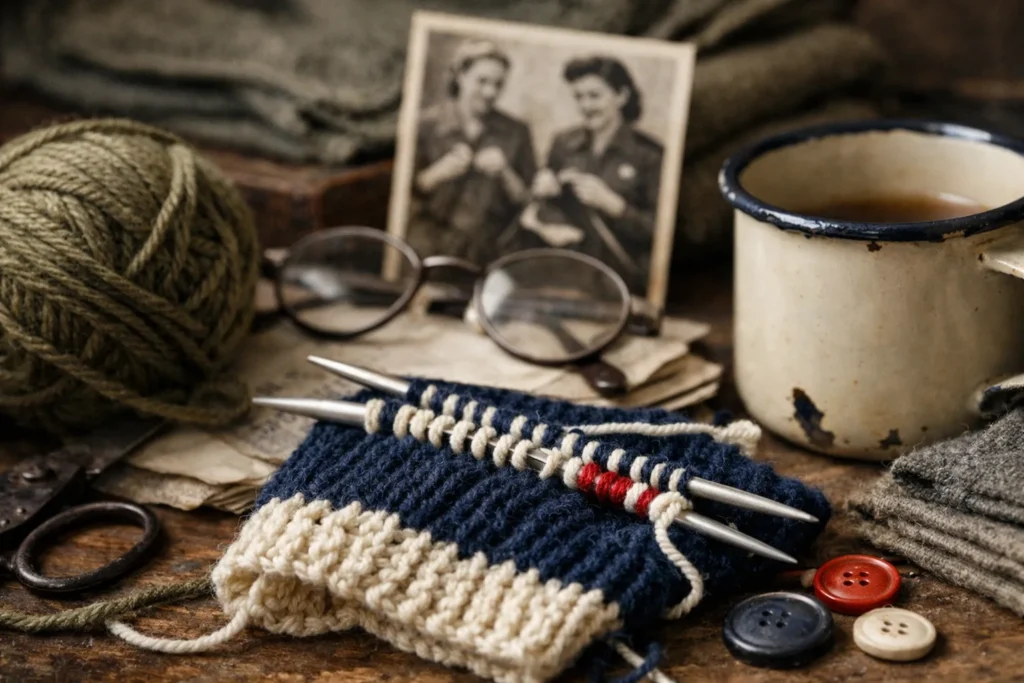
The most reliable fix is to knit a border in a stitch that lies flat. Garter stitch, which is knit on every row, and ribbing both do the job, because they pull the edges in different directions at once and cancel the roll.
- Garter borders: knit the first and last 5 stitches of every row, and add 6 to 8 rows of garter at the beginning and the end.
- Seed or moss stitch borders: alternate knit and purl on each row for a textured edge.
- Ribbing: a few rows of knit 1, purl 1 at the bottom of a hat or sweater also pulls in and sits flat.
- Seams and hems: some projects hide the roll inside a folded hem, which you stitch down.
If you are knitting a project that has a pattern from a guild or magazine, such as those shared by The Knitting Guild Association, you will often see these borders built in for exactly this reason. A beginner scarf from a community workshop in Ohio, for example, usually starts with a garter edge for the same reason.
How to block a piece flat
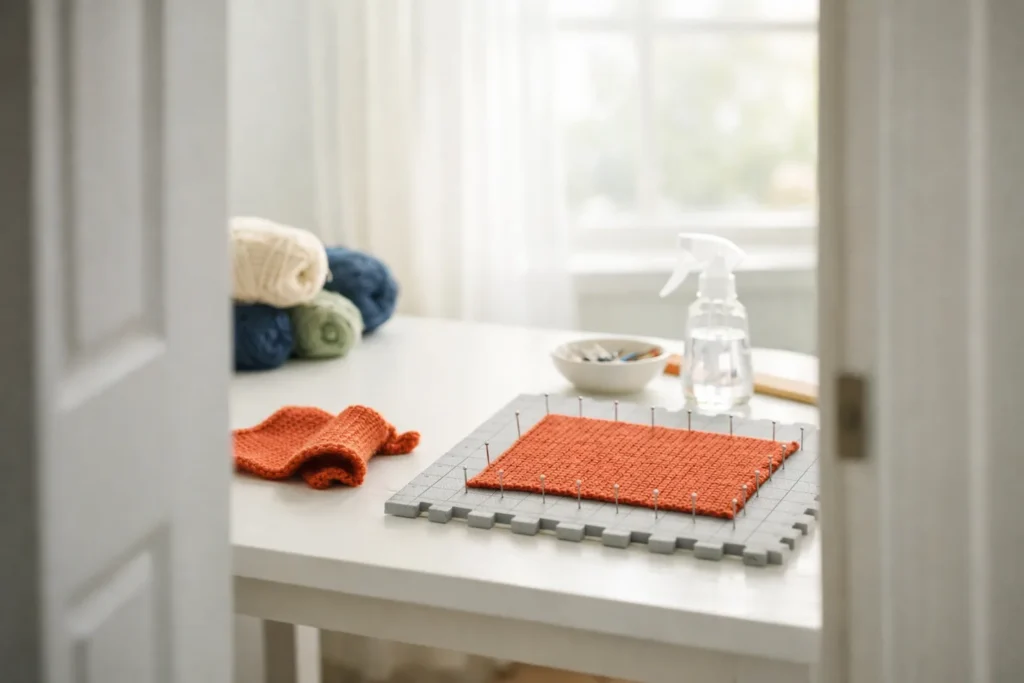
Blocking is the process of wetting or steaming a finished piece and pinning it into shape. It is the second line of defense against curl, and it also evens out your stitches. Follow these steps on a flat, padded surface such as a bed, a folded towel, or a set of foam mats.
- Check the label. Wool and most animal fibers block well. Acrylic needs special care, because heat can ruin its texture, and some yarns should only be steamed.
- Soak or mist the piece. For a wet block, soak it in cool water for 15 to 20 minutes, then press out the water in a towel without wringing. For a spray block, mist the piece until it is damp but not dripping.
- Pin to shape. Lay the piece on the padded surface and pin the edges, using a ruler to keep the lines straight. Place pins about every 1 to 2 inches (2.5 to 5 cm) along the curling edges.
- Steam if needed. Hold a steam iron about 1 inch (2.5 cm) above the fabric and let the steam do the work. Never press the iron on the knitting.
- Let it dry completely. This takes hours, sometimes a full day. Do not unpin it early.
Wool and cotton will hold the shape well after a wet block. Acrylic may relax again over time, so use a gentler approach and check the care label before you add steam.
What to expect afterward
Blocking will flatten the curl and relax the fabric, but it is not permanent for stockinette without a border. The piece may roll again after a wash or after a few weeks of wear, especially along the edges. That is why most experienced knitters combine a border with a gentle block.
If you have a finished scarf that curls, you can still add a border after the fact. Pick up stitches along the edge, knit a few rows of garter or ribbing, and bind off loosely. The result looks intentional, and it saves a piece you thought was a failure.
A rolled edge is part of the personality of stockinette. Once you understand why it happens, you can decide whether to fight it, hide it, or let it become part of the design.