
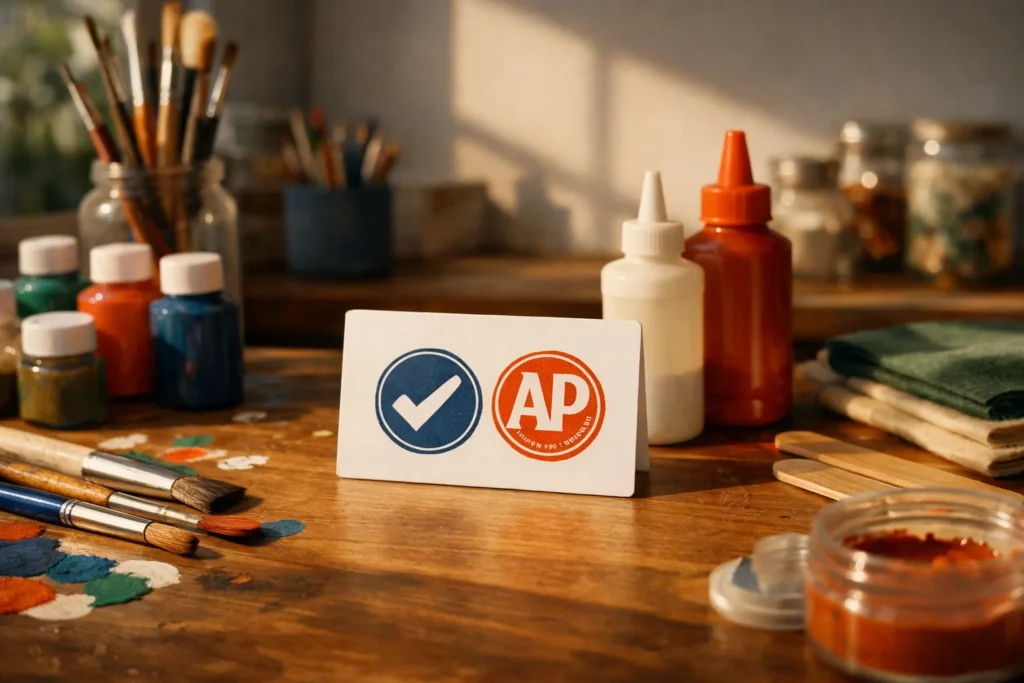
Turn over a tube of paint or a bottle of glue and you may see a small round seal with the letters “AP” and the words “Approved Product.” It belongs to the Art and Creative Materials Institute (ACMI), a trade organization for makers of art and craft materials. Many parents and teachers treat that seal as a stamp of safety. It is useful, but it helps to know exactly what it says.
What the seal means
Products can carry the AP seal when they have been reviewed by a toxicologist and found to contain no materials in amounts that could be toxic or harmful, including to children, according to ACMI’s program. Paraphrasing the organization’s own description:
Products bearing the AP seal have been evaluated by a toxicologist and certified to contain no materials in sufficient quantities to be toxic or injurious to humans, including children, or to cause acute or chronic health problems.
Paraphrased from the Art and Creative Materials Institute
That review is based on how the product is intended to be used, according to a recognized standard for art materials. For a paint tube, that means being brushed onto paper, not eaten or sprayed into the air.
The CL seal is different
Some products carry a different seal, marked “CL,” for cautionary labeling. It tells you that the product is certified to carry required warning information. It does not mean the product is unsafe, but it does mean you should read the warnings and follow them. Professional-grade paints with certain pigments often fall into this group.
What the seal does not cover
- Misuse. A certified paint is still not food. Keep it away from mouths.
- Allergies. A product can be nontoxic and still irritate sensitive skin or lungs.
- Everything around the product. A seal on the glue does not apply to the glitter, the sealer spray, or a scrap of old wood you are painting.
- Heat, sanding, or spraying. Using a product in a way the label does not describe changes the safety picture.
- Toy or children’s product rules. Those fall under other laws, which the Consumer Product Safety Commission (CPSC) enforces.
Federal labeling law
In the United States, the Labeling of Hazardous Art Materials Act requires art materials to be reviewed for chronic health hazards and labeled appropriately. This law is separate from the ACMI program, though ACMI certification is one way manufacturers demonstrate their products meet it. If a product does not display an ACMI seal, check the label for health warnings and a statement that it conforms to the relevant standard.
Practical habits
- Choose products with the AP seal for children’s projects and classroom activities.
- Read the whole label, including the age grading and any caution statements.
- Work in a ventilated room, and open a window when you use any glue, sealer, or paint with a noticeable odor.
- Do not eat or drink while crafting, and wash hands afterward.
- Keep supplies in their original containers so you can always check the label.
- Store everything out of reach of toddlers and pets.
If anyone swallows paint or glue, or gets a reaction, call Poison Control at 1-800-222-1222 and talk to a doctor. This is true even for a product with an AP seal.
Reading the label like a pro
The seal is a good starting point and not a final answer. If you are buying for a classroom, a scout troop, or a toddler’s table, add up three things: the seal, the age rating, and how the product will actually be used. When all three agree, you can relax and make a mess. For ideas on setting up a studio corner where ventilation and storage work well, browse seasonal and kids’ crafts.