
Secondhand shops are a gold mine for crafters on a budget, and Goodwill Industries, a nonprofit that funds job training with its store sales, is one of the best-known places to hunt. Stock changes daily, so the secret is to go often, go with a short list, and inspect everything.
Where to look first
- Housewares and linens: cotton sheets and tablecloths for fabric, baskets and jars for storage.
- Frames and wall art: sturdy wood frames, plus glass you can reuse for painting palettes.
- Books and magazines: pages for collage, plus pattern books.
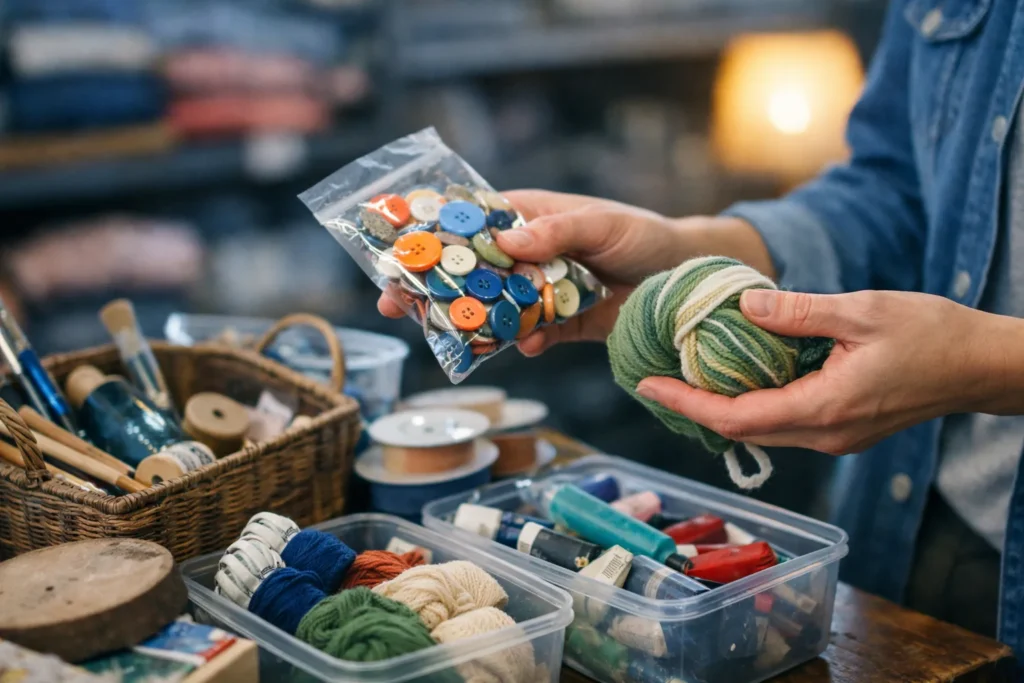
- Sewing and craft corner: yarn, thread, buttons, needles, and fabric scraps, sometimes in bags.
- Toys and games: game boards, wooden blocks, and puzzle pieces for mixed-media pieces.
Smart buys
Yarn in sealed bags and cotton or linen fabric are the best finds. Wooden knitting needles, crochet hooks, scissors, rulers, and metal tins hold up for years. Check brush bristles for fraying and bending, and buy only if the ferrule (the metal band) is tight. Glass jars are free storage once the labels soak off.
What to skip
- Open paint, glue, and spray cans of unknown age. They may be dried out, spoiled, or hazardous.
- Yarn that smells musty or has visible mildew, holes, or webbing.
- Electric tools with frayed cords or missing guards.
- Anything that looks old enough to carry lead paint, such as chipped vintage furniture you plan to sand. The U.S. Environmental Protection Agency has guidance on lead in older paint.
Wash and clean before use
Launder all fabric in hot water, as the care label allows, and dry it on high heat. Yarn can be soaked in warm water with mild soap and dried flat. Wipe wooden and plastic items with a mild soap solution, and wash brushes gently in warm water. Wear gloves when sorting through bins, and keep new finds separate from your clean stash for a few days, in a sealed bag, so you can check for pests. Any bargain is only a bargain if it is clean.