

The craft aisle is built to make you overspend. A better approach is to pick a few tools that work across several hobbies, then add things only when a project demands them. Here is a starter list that fits into $50 for one person, with a nod to safety.
Prices are typical ranges, and they move with location and season, so treat them as a guide and not a promise.
| Item | Typical price | Where to look | Buy or skip |
|---|---|---|---|
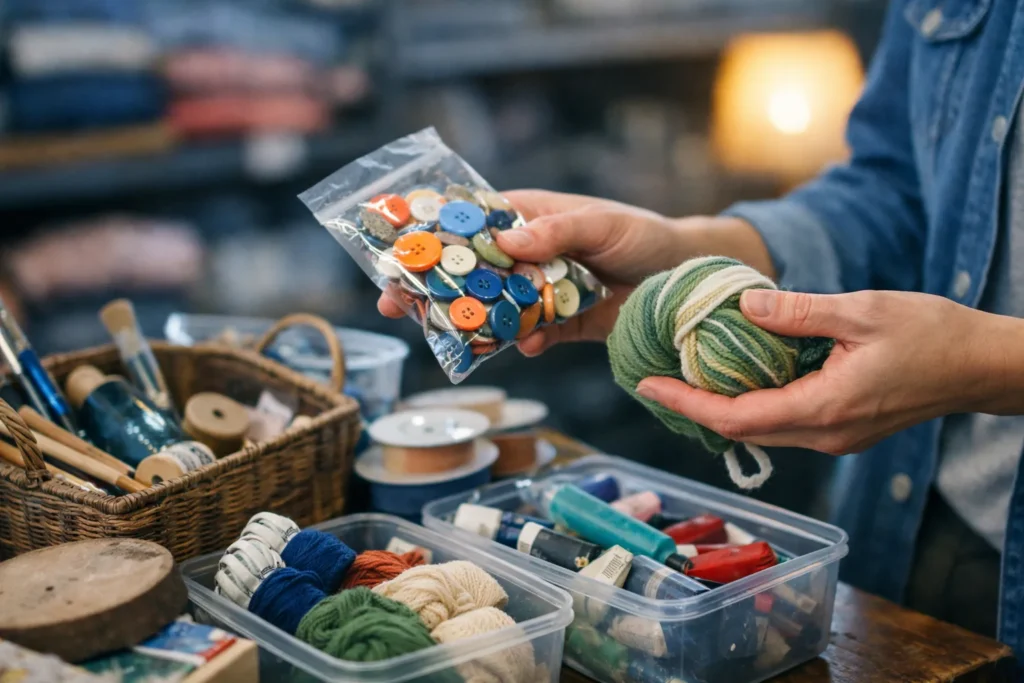
| Medium worsted-weight yarn, 1 or 2 skeins | $4 to $10 each | Craft store, thrift store, clearance bins | Buy |
| Knitting needles or crochet hook, size US 8 or H-8 | $3 to $8 | Craft store, yard sales | Buy one pair or hook |
| Sharp scissors | $5 to $10 | Hardware or office-supply store | Buy |
| Cardstock pad, assorted colors | $4 to $8 | Office-supply store, discount store | Buy |
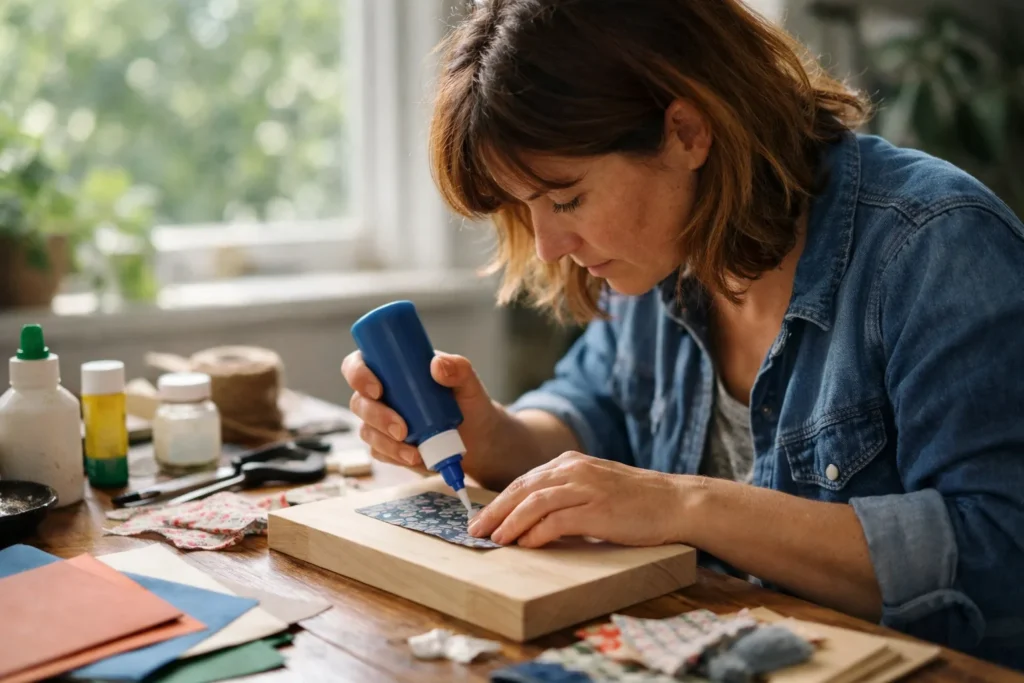
| Glue stick, nontoxic | $1 to $3 | Discount store, school-supply aisle | Buy |
| Basic acrylic paint set, 6 to 12 colors | $8 to $15 | Craft store, school-supply aisle | Buy |
| Three synthetic brushes (flat, round, detail) | $4 to $8 | Craft store, thrift store | Buy |
| Pencil, eraser, ruler | $3 to $5 | Anywhere | Often already at home |
| Rotary cutter and cutting mat | $15 to $30 | Craft store | Skip for now |
| Specialty stamps and embossing tools | $10 to $40 | Craft store | Skip until you know you need them |
Where the first $50 goes
Add up the “buy” rows and you land around $45 to $55, depending on what you already have. Many people discover they own a ruler, pencil, and scissors. If you do, use the extra money for a second skein of yarn or better brushes. The goal is to be able to start three small projects: a scarf or dishcloth, a handmade card, and a small painting on cardstock or canvas paper.
What to find at home first
- Cardboard from shipping boxes makes a free painting surface and a cutting mat substitute.
- A plate or egg carton works as a paint palette.
- An old towel protects tables and works as a blocking mat for knitting.
- A clean jar holds brushes.
- Used magazines supply collage paper.
Safety tips to keep in mind
The Consumer Product Safety Commission (CPSC) regulates consumer products and publishes guidance for families. A few of its recurring themes apply to craft shopping:
- Small parts such as beads, buttons, and pushpins are choking hazards for children under three. Keep them out of reach.
- Hot glue guns and craft knives need adult supervision around children and a stable surface for resting when hot.
- Look for labels on children’s art materials, such as the ACMI seal, and follow the age grading and warnings on the package.
- Buy used items with care. Check cords and plugs on secondhand electric tools, and skip anything with a damaged cord.
Painting, gluing, and spraying are best done in a room with fresh air and a window. Read the warning label on every product before you open it.
How to grow the kit
Once you have finished a few projects, you will know what you actually want. Add one thing at a time, and ask yourself whether it replaces a tool you already own. If you already knit and want to explore a second hobby, see painting and drawing for beginner-friendly projects.
Keep a running wish list on a sheet of paper. If an item is still on the list after a month, it is probably worth buying. If you have forgotten it, it was probably an impulse.